
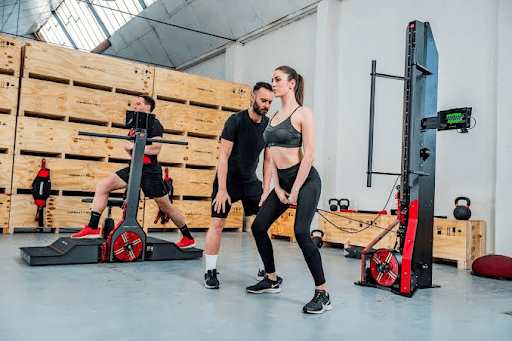
You walk into a gym and notice two very different machines. One looks like something designed by NASA. The other is the full-body gym machine you’ve probably seen in every gym for years. So, which one actually delivers better results?
The answer may surprise you.
Flywheel training has gradually changed how athletes, physiotherapists, and everyday gym-goers approach serious training. But can it outperform traditional gym machines? Let’s break it down in a simple, practical way.
First, What Is Flywheel Training?
Think of a yo-yo. You pull it down, it spins, and the spinning motion pulls it back up again. Flywheel training works in a similar way by using inertial resistance instead of traditional weights.
Here’s what makes it different:
- No plates or weights are used, and it does not rely on gravity
- Resistance is created by your own force output
- The harder you pull, the harder it pulls back
- Both the concentric (pushing) and eccentric (return) phases are fully loaded
This is one of its biggest advantages. Most traditional gym machines mainly challenge you during the lifting phase. However, much of the muscle development and injury prevention happens during the return phase. Flywheel equipment trains that movement just as intensely.
The Full-Body Gym Machine: The Old Friend You Can Trust
There’s a reason traditional full body gym machines remain popular. Walk into almost any commercial gym, and you’ll find them ready to use. They are approachable, beginner-friendly, and easy to understand.
Here’s why they continue to work well:
- They target multiple muscle groups in a single movement
- A guided range of motion helps reduce injury risk for beginners
- Load adjustments are simple with pin-selector or plate-loaded systems
- They support a wide range of fitness goals, from weight loss to muscle building
- They work well in busy commercial gym environments
Full body gym machines are especially useful if you’ve just started working out or run a facility with a mixed audience. They are consistent, predictable, and reliable.
Where Flywheel Training Equipment Stands Out
This is where things become interesting.
Imagine two athletes training for the same sport. One uses traditional gym equipment, while the other trains with flywheel systems. After six months, the flywheel user often shows better speed, power, and recovery ability. Why?
Eccentric Overload
Flywheel machines place greater demand on the muscles during the return phase, helping improve strength, control, and resilience.
Faster Neurological Adaptation
Because the resistance is self-generated and constantly changing, the body adapts more quickly. This can improve coordination, balance, and athletic performance.
Better Injury Rehabilitation
Eccentric training is widely used by physiotherapists to support tendon and muscle rehabilitation more effectively.
Improved Sport-Specific Performance
Flywheel systems are particularly effective for athletes training explosive, sport-specific movements such as sprinting, jumping, and rapid directional changes.
Not Dependent on Gravity
Unlike traditional weights, flywheel equipment can be used in multiple directions and movement patterns, creating more training flexibility.
The Day-to-Day Reality: Who Should Use What?
Imagine a 35-year-old runner dealing with chronic knee pain. In some cases, traditional gym machines can worsen that pain if the range of motion is not properly managed. However, clinical evidence shows that flywheel training equipment can support this type of rehabilitation more effectively.
Now imagine a 22-year-old entering a gym for the first time. Starting with a flywheel machine on day one may feel overwhelming. A well-designed gym machine, on the other hand, can help beginners build confidence, learn proper technique, and create a strong foundation.
Final Thoughts
Both training methods have an important place in a well-rounded fitness programme.
Traditional gym machines helped shape modern fitness culture because they are accessible, reliable, and easy to use. However, flywheel equipment represents where performance-focused training is heading.
If you are building a serious performance facility or want to train at a higher athletic level, flywheel training is far more than a passing trend. It is built on proven principles of muscle development, injury prevention, and athletic performance.
The smarter question is not which one to choose. It is whether your current setup is helping you reach your full potential.
For More Info Visit:- articlesjam.com