
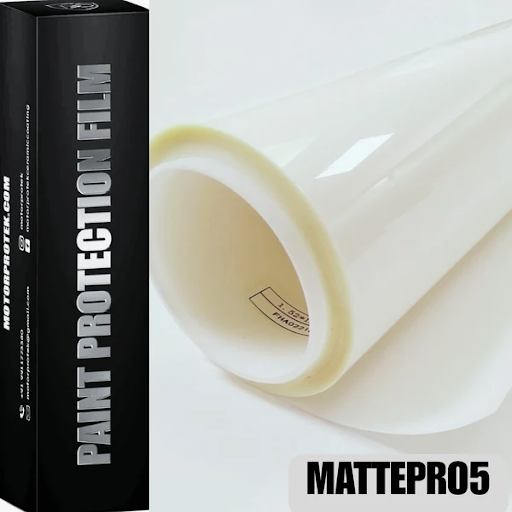
When considering paint protection for your car, it’s not just a question of how much of the bodywork you want to cover. The finish matters too. Some owners love the deep shine of a freshly detailed car, while others prefer the understated look of a matte finish. The good news is that today’s paint protection films have options for either style.
If you compare matte PPF to gloss PPF, it will come down to the original paint on your car, your own taste, and how you want the vehicle to look over time. Both finishes will help protect the exterior, but they produce distinctly different looks.
What is PPF and why does finishing matter?
Paint protection film or PPF, is the protective layer that is applied on painted panels of a vehicle. TPU, or thermoplastic polyurethane, is a flexible material used in many premium products to help resist minor scratches, road debris, and everyday wear and tear.
The finish of the film determines the surface of the vehicle and how the light reflects off of it. Gloss PPF is meant to preserve or add shine, while matte PPF gives a softer, non-reflective finish. This is especially true when protecting factory matte paint, as the wrong product can change the appearance of the paint.
Matte PPF: Sleek, Contemporary and Unique
Drivers are increasingly choosing Matte PPF, as it gives them the opportunity to alter the look of their cars without a drastic change in color. Its satin finish reduces reflections and lends a smooth, understated look to body panels.
Advantages of Matte PPF
A different look: Matte finishes can give a car a modern, distinctive look. Often they highlight the form of the bonnet, shoulders, and side panels without the stark reflections of a gloss finish.
Specialized finish protection Factory matte paint can be hard to consistently repair if it’s scratched or damaged. A matching matte paint protection film can help protect the original finish from some everyday hazards.
Less surface reflections. The finish is non-glossy and therefore creates a different visual effect in bright sunlight and under artificial light. Owners who like a restrained look rather than a high-shine finish will appreciate this.
There are a couple of things though. Matte surfaces require appropriate cleaning products. Regular polishing or waxes can create unwanted shine. Owners should follow the care instructions of the film manufacturer to maintain the intended finish.
Gloss PPF: The classic high-shine finish
Gloss PPF is loved by drivers who want to keep the original look of their car or who want to add a deeper, more reflective shine to their paintwork. It works very well on vehicles with factory gloss paint.
Advantages of Gloss PPF
Adds depth to the paint job: A good gloss film can make the paint job look smooth and vibrant, especially when the surface underneath has been properly prepared.
Clear gloss PPF is usually the go-to option if you love the factory finish on your car. It protects paint without intentionally altering its reflective appearance.
Familiar maintenance routine: Gloss finishes can be washed with many standard automotive washing products, as long as they’re suitable for the particular film. Owners may find the care process more familiar than maintaining a matte finish, but routine cleaning is still important.
Gloss PPF can show reflections clearer, including imperfections trapped under the film. That’s why proper preparation and professional installation can make such a huge difference in the final result.
Matte PPF vs Gloss PPF: What’s the Difference?
The difference is not what the film is for but the look of the film. Both finishes can provide protection against everyday road hazards and minor abrasion, depending on the product specifications.
Matte PPF is for drivers who want a satin-look finish or need to keep factory matte paint. Gloss PPF is the best choice for people who want that shiny look and want to maintain the character of traditional automotive paint.
Neither finish is necessarily more durable than the other. Its performance is more dependent on material quality, topcoat technology, installation, and maintenance than on appearance alone. Check options and read the manufacturer’s information on stain resistance, UV stability, self-healing properties, and warranty coverage.
Can You Put PPF on Any Car?
PPF can be applied to most vehicles, but the film must be compatible with the existing paint and finish. If your car has factory matte paint, use a product that is specifically approved for that surface. Matte PPF can give a different look to a gloss-painted car, but it’s worth seeing a sample before you go ahead and do the whole car.
You can also choose partial or full body coverage. If you’re on a budget, consider protecting high-impact areas like the front bumper, bonnet, and side mirrors. Full body coverage will give you a more consistent finish across the vehicle.
So, What Finish Should You Go For?
Think about how you want to look every day. Matte PPF is also great if you want to protect a matte finish or simply want a more subdued style. If you want a classic shine and that fresh-from-the-factory look, gloss PPF is the way to go.
Whatever you choose, invest in good materials and experienced installation. When you choose the right PPF film and take care of it, you can help keep your car looking great and reduce the damage that normal wear and tear from driving can cause.