
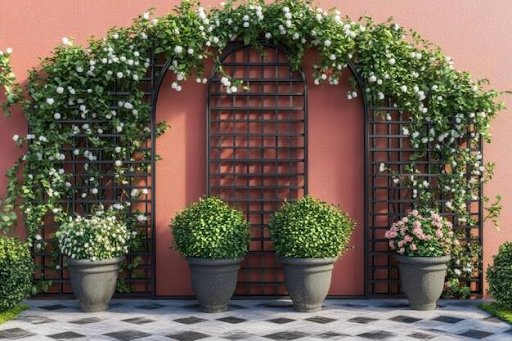
A well-placed vertical structure can transform an ordinary garden into something with real visual depth. Beyond supporting climbing plants, these structures create privacy, define outdoor rooms, and add architectural interest even before anything begins to grow on them.
With so many design directions to choose from, it helps to think through both function and style before settling on a final structure for your space.
The following ideas cover a range of budgets and skill levels, from simple weekend builds to more involved standalone features, so there is a practical starting point for nearly any gardener.
Considering both the visual impact and the practical needs of the plants you intend to grow will help narrow down which of these approaches fits your garden best.
Read on for ideas suited to nearly any style and budget.
From simple weekend projects to more elaborate garden features, there is an option here for almost every skill level.
Freestanding Structures for Focal Points
Whether you want a simple support for vines or a statement piece, there are countless trellis ideas to match nearly any garden style, from rustic and cottage-inspired to sleek and modern.
A standalone piece placed at the end of a path or center of a bed draws the eye and gives climbing plants like clematis or sweet peas a dedicated home. These work particularly well in smaller gardens where a full pergola would feel too large for the space.
Painting or staining a freestanding piece in a contrasting color also helps it read as an intentional focal point even during the off-season, before plants have fully filled in.
Wall-Mounted and Fence-Line Options
For narrow side yards or existing fence lines, a flat panel design maximizes climbing space without taking up ground area. This approach is popular for a simple diy trellis project since it requires fewer materials and can often be completed in a single afternoon.
- Lattice panels for roses and clematis
- Horizontal wire grids for espaliered fruit trees
- Fan-shaped frames for compact vines
Privacy Screens That Double as Garden Features
Taller, closely spaced designs can screen an unwanted view or create a sense of enclosure around a patio. Combining this function with flowering vines turns a purely practical privacy element into an attractive garden focal point over a single growing season.
Materials for Trellis Construction
Cedar and redwood resist rot naturally and weather to an attractive silver-gray if left unfinished, while pressure-treated pine offers a budget-friendly alternative. Metal options, including powder-coated steel, suit more modern gardens and typically require less ongoing maintenance than wood-based trellis construction.
Whichever material you choose, spacing the supports appropriately for your specific plant is worth researching in advance, since fast-growing vines can quickly outpace a structure that was sized for a smaller, slower plant.
Choosing a Design That Fits Your Space
Match your trellis design to both the plant you intend to grow and the amount of sun the location receives. Heavier vines like wisteria need a sturdier frame than annual flowering climbers, so consider mature plant weight before finalizing your structure’s dimensions.
Seasonal Maintenance and Longevity
Even a well-built structure needs occasional attention to stay sturdy year after year. Trimming back overgrown vines each season prevents excess weight from stressing joints, and checking for loose fasteners or rot at ground contact points catches small problems before they require a full rebuild.
Repainting or resealing wood every two to three years, depending on climate exposure, keeps the structure looking fresh and extends its usable life well beyond what an unmaintained piece would achieve.
Pairing Structures With Companion Plants
Combining a climbing plant with lower-growing companions at the base creates a fuller, more layered look while the vine establishes itself. Fast bloomers like morning glory can provide quick color in the first season, while slower perennial vines fill in more substantially over subsequent years.
Considering bloom time and foliage color together helps ensure the structure looks attractive across multiple seasons rather than only during a brief flowering window.
Conclusion
From simple fence-line panels to standalone garden focal points, the right vertical structure adds both function and character to outdoor spaces. Matching your design and materials to your climbing plants and garden style ensures the finished piece looks intentional long after installation.
With a small amount of seasonal upkeep, these structures can remain a garden centerpiece for many years rather than a short-lived addition.
Whichever design you choose, a little planning upfront ensures the finished structure grows into an asset the garden continues to benefit from for years to come.