
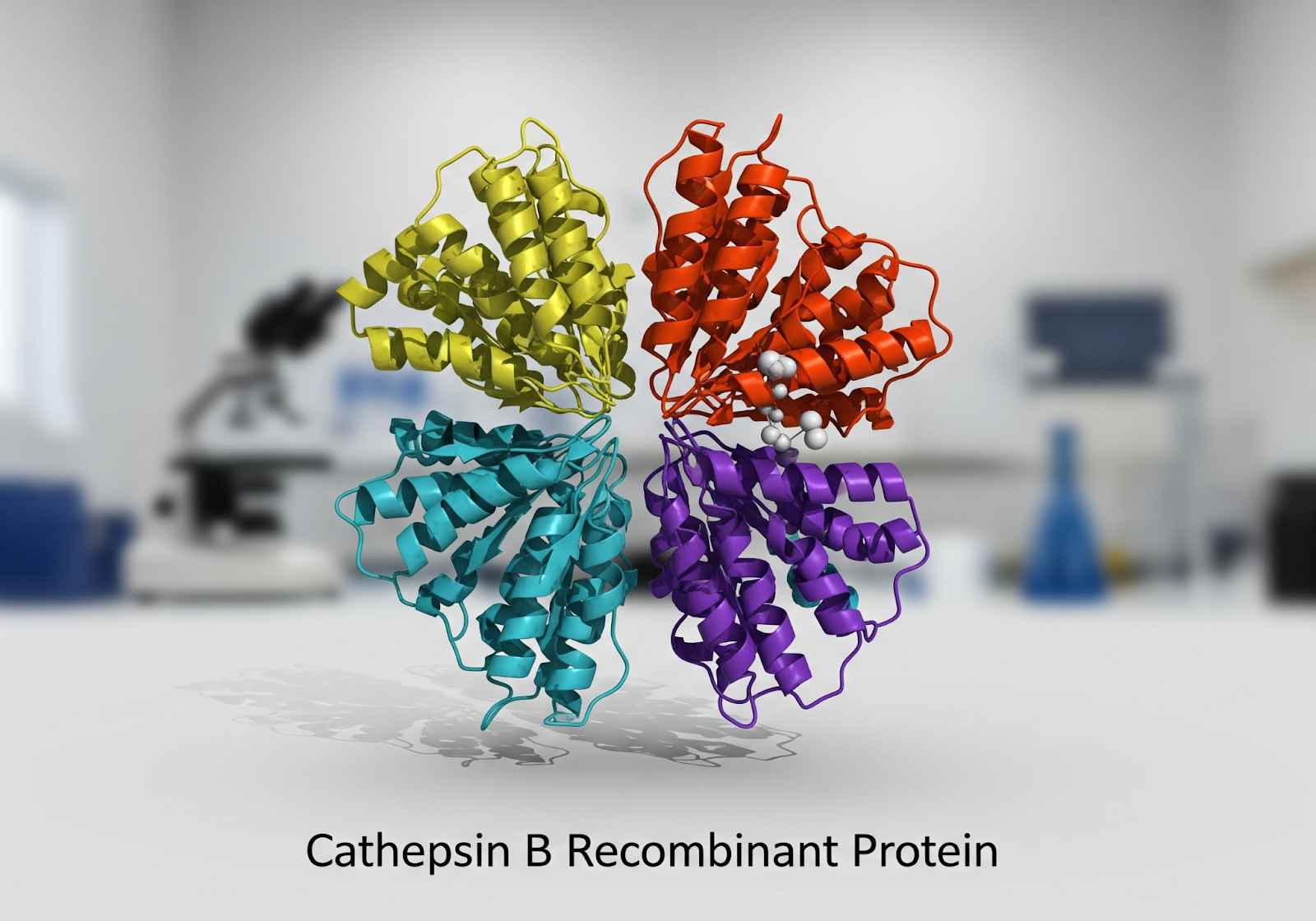
Cathepsin B (Ctsb) Recombinant Protein is a critical tool in biochemical research, particularly for studies of lysosomal proteolysis, cancer progression, and neurodegenerative diseases. This cysteine protease, produced through recombinant DNA technology, provides researchers with a standardized, high-purity reagent essential for elucidating the enzyme’s structure-function relationships and developing therapeutic interventions targeting protease activity.
Understanding Cathepsin B Structure and Function
Cathepsin B belongs to the papain superfamily of cysteine proteases and functions primarily within lysosomes, where it catalyzes protein degradation at acidic pH. The enzyme exists as a proenzyme that undergoes autocatalytic activation, cleaving its propeptide to generate the mature, catalytically active form. This two-chain structure consists of heavy and light chains connected by disulfide bonds, creating the characteristic substrate binding cleft.
The recombinant protein replicates the native enzyme’s catalytic properties while offering superior consistency compared to tissue-derived preparations. Researchers utilize this standardized reagent to investigate substrate specificity, inhibitor binding, and conformational changes associated with activation. The availability of highly purified recombinant cathepsin B eliminates variability inherent in native protein isolation, enabling reproducible experimental results across laboratories.
Applications in Cancer Research
Cathepsin B demonstrates elevated expression in numerous malignancies, where it contributes to tumor invasion and metastasis through extracellular matrix degradation. The recombinant protein enables researchers to characterize these pathological mechanisms in controlled experimental systems. In vitro assays using purified cathepsin B elucidate how the protease cleaves specific ECM components, facilitating cancer cell migration.
Drug discovery programs targeting cathepsin B rely extensively on recombinant protein for high-throughput screening of inhibitor libraries. The standardized enzyme preparation ensures consistent assay performance across thousands of compound evaluations. Researchers assess inhibitor potency, selectivity, and mechanism of action using recombinant cathepsin B before advancing candidates to cellular and animal studies. This approach accelerates therapeutic development while reducing costs associated with native protein purification.
Neurodegenerative Disease Studies
Cathepsin B participates in neurodegeneration through multiple mechanisms including tau protein processing, amyloid precursor protein cleavage, and inflammatory response modulation. Recombinant protein facilitates investigation of these pathways by providing researchers with tools to reconstitute specific proteolytic events in biochemical assays. Studies examining cathepsin B-mediated tau fragmentation utilize purified recombinant enzyme to identify cleavage sites and generate fragments for downstream analysis.
Alzheimer’s disease research particularly benefits from cathepsin B recombinant protein availability. The enzyme processes amyloid beta peptides, potentially influencing aggregation propensity and neurotoxicity. Investigators use recombinant cathepsin B to characterize these processing events, determine optimal reaction conditions, and evaluate how disease-associated mutations affect proteolytic activity. Such mechanistic insights inform therapeutic strategies aimed at modulating cathepsin B activity in neurodegeneration.
Experimental Protocols and Technical Considerations
Optimal utilization of cathepsin B recombinant protein requires understanding its biochemical properties and storage requirements. The enzyme exhibits maximal activity at pH 5.0-6.0, necessitating appropriate buffer selection for assays. Researchers typically employ acetate or citrate buffers supplemented with reducing agents like dithiothreitol to maintain the catalytic cysteine in reduced form. Temperature control proves equally critical, as cathepsin B demonstrates temperature-dependent activity and stability profiles.
Storage conditions significantly impact recombinant protein longevity and performance. Most preparations require storage at -80°C in buffers containing glycerol or other cryoprotectants to prevent freeze-thaw damage. Researchers should avoid repeated freezing and thawing, instead preparing single-use aliquots upon receipt. Addition of carrier proteins like bovine serum albumin can enhance stability during storage and prevent surface adsorption during dilution for assays.
Quality Control and Characterization
High-quality recombinant cathepsin B undergoes rigorous characterization to ensure suitability for research applications. Purity assessment via SDS-PAGE and analytical ultracentrifugation confirms the absence of contaminating proteins that might interfere with experimental interpretations. Activity measurements with fluorogenic substrates establish specific activity and enable verification of batch-to-batch consistency.
Mass spectrometry analysis verifies the correct molecular weight and identifies any post-translational modifications present in the recombinant protein. Endotoxin testing ensures preparations meet acceptable limits for cell-based assays where contamination could trigger unwanted cellular responses. Comprehensive characterisation data provided by suppliers enable researchers to select appropriate reagents and troubleshoot experimental issues as they arise.
Conclusion
The recombinant Cathepsin B protein is an indispensable research tool across cancer biology, neuroscience, and drug discovery. Its consistent quality, defined composition, and well-characterised properties enable reproducible experimentation across diverse applications. As understanding of cathepsin B’s roles in health and disease continues expanding, the availability of high-quality recombinant protein will remain essential for translating mechanistic insights into therapeutic advances. Researchers selecting cathepsin B preparations should prioritize comprehensive characterization data and supplier reputation to ensure experimental success.