

When it comes to selecting the perfect countertop, homeowners in 2025 have a wide variety of options—quartz, granite, marble, and more. But among these, quartzite countertops are quickly gaining attention for their strength, natural beauty, and elegance. Many people confuse quartzite with quartz, but they are not the same. Quartzite is a natural stone, while quartz is an engineered product. This difference is what makes quartzite so unique.
In this guide, we’ll take you through everything you need to know about quartzite countertops—from what they are and how they’re made to their pros and cons, cost factors, care tips, and buying considerations. If you’re planning a kitchen or bathroom remodel, this comprehensive guide will help you decide whether quartzite is the right choice for your home.
What Is a Quartzite Countertop?
Quartzite is a natural metamorphic rock formed when sandstone undergoes intense heat and pressure deep within the earth’s crust. This process fuses quartz grains together, creating an incredibly hard and durable stone.
Quartzite slabs are quarried, cut, and polished into beautiful countertops. Because it is natural stone, no two quartzite slabs look the same—each has unique veining, colors, and textures. Its look often resembles marble but with the hardness closer to granite, making it a popular choice for homeowners who want both beauty and resilience.
Quartzite vs. Quartz: The Key Difference
The names “quartz” and “quartzite” often cause confusion. While they sound similar, they are very different:
- Quartzite – 100% natural stone formed through a geological process. It has natural variations and requires sealing.
- Quartz – Engineered stone made from crushed quartz crystals mixed with resins and pigments. It is non-porous and does not require sealing.
In short, quartzite gives you the natural beauty of marble with the strength of granite, while quartz offers more uniformity and less maintenance.
The Advantages of Quartzite Countertops
Here are the main benefits of choosing quartzite countertops:
- Durability – Quartzite is one of the hardest natural stones, even stronger than granite.
- Heat Resistance – It can withstand high temperatures, making it safe for hot pots and pans.
- Scratch Resistance – Less prone to scratches compared to softer stones like marble.
- Stain Resistance (with sealing) – Once properly sealed, quartzite resists stains from spills.
- Natural Beauty – Many varieties closely resemble marble, offering dramatic veining and elegant patterns.
- Long Lifespan – With proper care, quartzite countertops can last for decades.
The Disadvantages of Quartzite Countertops
Like any material, quartzite has some drawbacks:
- Requires Sealing – Being a natural stone, it must be sealed regularly to prevent stains.
- Limited Colors – Quartzite usually comes in whites, grays, and earth tones, unlike quartz, which has endless colors.
- Cost – It is generally more expensive than granite and close to high-end quartz or marble pricing.
- Difficult Installation – Because it is so hard, quartzite requires professional installation with special tools.
- Chipping on Edges – Although tough, sharp corners may chip if hit with force.
Popular Quartzite Colors and Patterns
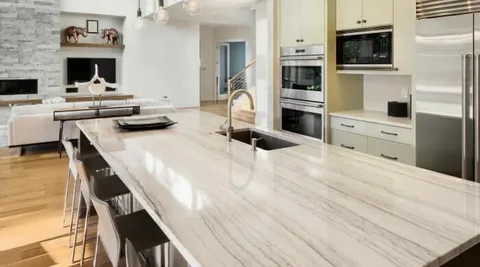
Quartzite offers a range of stunning natural looks. Some of the most popular choices include:
- Taj Mahal Quartzite – Creamy beige with soft golden veining, elegant and warm.
- White Macaubas Quartzite – Crisp white with fine gray veining, great for modern kitchens.
- Sea Pearl Quartzite – Light gray with a subtle, wave-like pattern.
- Cristallo Quartzite – A semi-translucent quartzite that can even be backlit for dramatic effect.
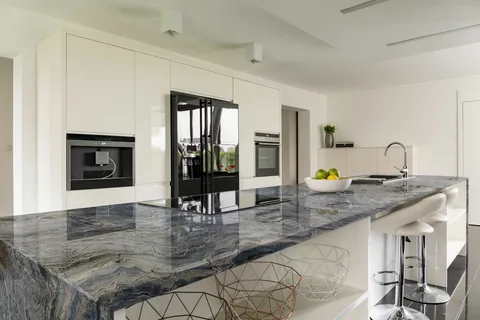
- Blue Quartzite – Rare quartzite with soft blue hues, perfect for unique designs.
- Fantasy Brown Quartzite (often debated as marble) – Brown, gray, and white swirls that resemble marble.
Each slab is unique, so visiting a showroom to select your slab in person is always recommended.
Quartzite Countertops vs. Other Countertop Materials
Quartzite vs. Granite
- Harder than granite, making it more durable.
- Granite offers more color variety.
- Both require sealing, but quartzite often mimics marble better.
Quartzite vs. Marble
- Looks similar to marble but is much stronger and more resistant to scratches.
- Marble requires more maintenance and stains easily, while quartzite is more resilient.
Quartzite vs. Quartz
- Quartzite is natural, quartz is engineered.
- Quartzite requires sealing, quartz does not.
- Quartzite offers unique natural beauty, while quartz provides consistency.
How Much Do Quartzite Countertops Cost?
The cost of quartzite countertops typically ranges from $70 to $200 per square foot installed, depending on several factors:
- Rarity of the stone – Exotic varieties like Cristallo or Azul Macaubas are more expensive.
- Slab thickness – Thicker slabs (3cm) cost more than thinner ones (2cm).
- Edge design – Complex edges like ogee or waterfall increase the price.
- Finish type – Polished, honed, or leathered finishes can affect pricing.
- Installation difficulty – Custom shapes, cutouts, or large kitchens add to costs.
If you want a full breakdown of quartzite countertop cost, you can learn more here.
How to Maintain Quartzite Countertops
Quartzite is strong, but like all natural stone, it requires proper care:
- Clean daily with a soft cloth, mild soap, and warm water.
- Avoid harsh or acidic cleaners that can damage the seal.
- Wipe spills quickly, especially oils, coffee, and wine.
- Reseal once a year to keep it stain-resistant.
- Always use cutting boards and trivets to protect the surface.
With proper maintenance, your quartzite countertops will look brand-new for decades.
Things to Consider Before Buying Quartzite Countertops
Before making the investment, here are some key points to keep in mind:
- Set Your Budget – Quartzite is a premium material, so plan your investment carefully.
- Choose the Right Color – Visit a showroom to see the unique veining and select the exact slab.
- Decide on Thickness and Edges – Thicker slabs (3cm) are more durable, while edge profiles add character.
- Visit Showrooms in Person – Photos don’t capture quartzite’s natural beauty. Seeing it under real lighting makes a big difference.
- Compare Quotes and Warranties – Get multiple estimates and check coverage for both material and installation.
- Think About Long-Term Care – Be ready for annual sealing to protect against stains.
- Prioritize Sustainability – Look for responsibly sourced quartzite from ethical suppliers.
Is Quartzite Worth It?
Quartzite is more expensive than many countertop materials, but for homeowners who value durability, elegance, and natural beauty, it is worth the investment. Unlike marble, it resists scratches and etching, and unlike quartz, it offers the uniqueness of natural stone. For kitchens and bathrooms that need both style and strength, quartzite is an excellent choice.
Conclusion
Quartzite countertops combine the timeless beauty of marble and the toughness of granite, making them a standout option for homeowners in 2025. While they require sealing and come at a higher price point, their durability, heat resistance, and natural elegance make them one of the best long-term investments for kitchens and bathrooms.
By setting a budget, exploring color and pattern options, and working with a skilled installer, you can find the perfect quartzite slab that enhances your home for years to come. If you’re ready to upgrade your countertops, quartzite might just be the ultimate choice you’ve been searching for.